Monday, August 18, 2025

No Book Banning

Last February, the Florida governor called out the "book ban hoax" spinning recent censorship legislation as a parents' rights issue. 
“Over the past year, parents have used their rights to object to pornographic and sexually explicit material they found in school libraries,” said Governor DeSantis. “We also know that some people have abused this process in an effort to score cheap political points. Today, I am calling on the Legislature to make necessary adjustments so that we can prevent abuses in the objection process and ensure that districts aren’t overwhelmed by frivolous challenges.”

The governor tells a different story than Leslie Postal reported in the Orlando Sentinel reported. He tells a different story than my teacher friends do. They experienced books being disappeared. They had their classroom bookshelves sealed away with banner paper. They scanned and uploaded titles in their rooms to monitored databases. Teachers' experience doesn't jive with the governor's spin.

Thankfully, this August a federal judge, U.S. District Judge Carlos Mendoza,  struck down key elements in the overly broad Florida House Bill 1069. Great news! As the AP reports, educators in Florida are encouraged to, "revert back to a U.S. Supreme Court precedent in which the test is whether an average person would find the work prurient as a whole; whether it depicts sexual content in an offensive way; and whether the work lacks literary, artistic, political or scientific value."

Good news! All of the books in my current middle school classroom library have recognized value. Many have won awards. Many are on recommended reading lists. I'm sending a letter home to share the value of reading with parents. I'm scanning the titles in my classroom library using Beanstack, so all can see what's on offer and then. 

Then, we read. 

Our classroom library is open! 


References

"Judge Strikes Down Key Parts of Florida Law that Led to Removal of Books from School Libraries." 

    4 August 2025. https://apnews.com/article/florida-schoolbook-ban-a3448c8f0bdfb863d1

    a495580b8ce6e4. Accessed 5 August 2025. 

“Governor Ron DeSantis Debunks Book Ban Hoax.” Florida Governor Ron DeSantis, 15 February 2024. 

    https://www.flgov.com/2024/02/15/governor-ron-desantis-debunks-book-ban-hoax-calls-on-florida-

    legislature-to-amend-the-law-to-prevent-abuse-from-activists/. Accessed 2 February 2024.

Postal, Leslie. "Orange school district pulls 673 books from teachers’ classroom shelves." The Orlando 

    Sentinel. 20 December 2023. Accessed 15 June 2024.


Tuesday, August 27, 2024

Nurture Readers' Joy

 Let's face it. We love stories. We tell them. We watch them. We share them. We laugh and wonder over them. Stories move us to action and to tears. We may read with our ears, with our eyes, or even with all of our senses while playing in immersive worlds. Our human love of stories does not always translate into a love of reading the printed word. 

Seeding students' love for books and the printed world of story, takes time, intention and a whole lot of practice.  I am just beginning that practice with seventh graders. Here are 6 moves I make to nurture readers' joy. 

1. I use excerpts from books from our Sunshine State readers list for this year in most of my initial assessments and strategy introductions at the start of the year (Writing that Shows, Letter to Students). Those excerpts give me a chance to book talk books I've read over the summer in order to introduce them to kiddos.  We start a conversation about books during the first days of school. 

P didn't write about books when he wrote back, but S did. I learn a lot about students as readers and writers from the first things they write in my class. 

2. Do a book pass or book tasting to introduce books to kids. This activity has gone by many names in the thirty years I've been teaching: speed dating, book tasting, etc. This year, we went to the media center. I sat students in their regular groups of 4 and I put a book bin of 9-12 books on each table. 

I began by talking about the word buffet  and the buffet at Basilico in Singapore (it's cheese room is pictured on the slide). Then I invited students talk about how the media center is like a buffet. Once we shared, I demonstrated how to preview a book and how to take a few notes for our reader selves so that we could remember the titles when we were next looking for a book to read. Then I released students to preview the books in their small groups. Once they'd looked at and taken note of 5-7 of the titles I had curated for their groups, they were able to free range through the stacks in the media center.


3. We will kick off independent reading in class on Monday. I will give students 8-10 minutes of reading time at the start of class. Reading is our bell work, our do now, our default whenever we finish something early. I am teaching that routine right now and I know that it will not be well rooted for a many weeks. Short bursts of reading keep kids engaged. I have found that if I allow too much time for reading, especially when I do not yet know the readers in my room, many kids fall asleep or disengage. 

Once rooted the reading routine will begin producing joy, but that takes months, sometimes until January even. 

4. Instead of keeping track on a share a google sheet as  I've done in the past with older students.  I will  record their progress on anecdotal notes I keep in GoodNotes 5 as I confer with them. For our first session though, I used Nanci Atwell's Status of the Class: called names, gathered titles and page numbers. I  praised students progress who surprised me by having books they were in the middle of already. This formative check in is quick, about a minute to call and jot. Sharing that way once a week, creates space for students to hear a variety of book choices and see each others' excitement. Plus, if I am the one monitoring, I can make sure we  read more than we count or account. Reading is not accounting after all. 

5. Weekly, I will ask students to write about what they have read in their Readers' Writers' Notebook (RWN). This practice I learned from Linda Reif, though the title has morphed into ELA Journal at present. This quarter I invite students to write using these prompts. There is a time and a place for prompted and unprompted writing in our class. I prompt my readers who are writing about their independent reading because our prompts help us practice what we are learning in class. 


6. Once we've begun reading and writing about what we're reading, I begin conferring with the kids. Our first conferences about their reading have many purposes--here they are described in terms of high school readers. I imagine there will be some shifts with middle school readers as their reading lives are at different stages. 


When I taught high school sometimes the Best Laid Plans still need to be adapted when it comes to Conferences and Time. Making conferring a routine roots us in reading practice that cultivates and shares joy.  I'll be sure to share how these routines work or go awry in my middle school classroom too.  We eventually shift from talking about their reading, to using their journal writing to discuss reading and writing. It is all Reading and Practice.

Setting up reading and writing routines takes time. We've got to plant the seeds. Let them germinate. The sprouts, sometimes takes weeks.  There is a science to reading and we need to use that data to check readers' skills and growth along the way. 

Eventually after many months of consistent care, readers will harvest joy. They will bring the book love to each other and we will come together in community to share in the bounty of story. 

Tuesday, August 6, 2024

8 Lessons for People from the Pack


This year, I am on the opening team for a new public middle school here in Orange County.  During our pre-planning days we are doing a lot of talking about establish culture and community. We can take away many lessons from wolves for our community. We are the wolves and #onepack is part of our story this year. 

To bring our new wolves into the pack, many of us will build community with ice breakers, team builders and other team challenges.  With 50 minute class periods, a quicker 5-8 minute activity makes for the perfect “do now” or transition into class at the start of each period or a wrap up for the end of each class period. 

I love Playmeo for activities and ideas. Stacey Jensen, an extraordinary teacher and advisory coordinator, introduced me to the site years ago. I can quickly find an ice break, an energizer, or a trust builder and I love that I can create lists of activities to use for units I'm planning. Our first week, with pack plans in pink,  is looking like this so far: 

I observe the pack while we engage in these community builders. Yetta Goodman used to call it “kid watching." Observing learners informs instruction. I question a lot of what I see: 
  • Who's leading? Who's encouraging? Who's shy or hanging back?
  • How can I use this data with students? How might I use photos to support students' reflections?
  • How are students' talents, interests or needs showing up?
The start of a new school year is magical. To bring that magic,  I am reminding myself to avoid activities that could resurface trauma.  Instead of writing or talking about our names' origins, turn initials into mantras for the traits we most want to showcase this year. Instead of doing Blueprints of a Lifetime sketching our homes and basing stories on homes' floor plans, now I'll give students choices for sketching and storytelling: a favorite place, a room, a learning space, a community space, a park or an outdoor space. Even a thing can be sketched and storied.

I remind myself, if and when things seem to settle into silence in the first weeks: get kids moving. Get kids talking to each other. Get kids laughing. Get them reading and writing.  As we play and work together—connections build.  Our pack will be richer for it.

Thanks to the team at Two Writing Teachers!
Jump over to serve yourself another slice today.


Friday, June 7, 2024

Value Readers


Recently during a lunch break, teachers were talking about ways to encourage students to read more. They shared ideas, like encouraging choice and using scheduled time for reading. They were passionate about the importance of DEAR (Drop Everything and Read) time being built in to the daily schedule. A couple of teachers said that time is the biggest constraint. They said that with reading time built into the school schedule, everyone could read more. Everyone would be expected to read they said. We could do book talks and we could.... and we could... all of the things. Were all of the things actually reading? Reading adjacent, sure.

I enjoyed listening and remembering similar conversation from my years in schools. I kept quiet though. 

I thought about Linda Rief and time I spent in her classroom and I thought about teachers whose practice I've studied and learned with (Penny Kittle, Kelly Gallagher, Jen Roberts,  Jennifer Serravallo, Nancie Atwell). Listening to that group of teachers brought Atwell's wisdom to mind: 

“When we invite readers’ minds to meet books in our classrooms, we invite the messiness of human response—personal prejudices, personal tastes, personal habits, personal experience. But we also invite personal meaning, and the distinct possibility that our kids will grow up to become a different kind of good reader, an adult for whom reading is a logical, satisfying, life-long habit, someone who just plan loves books and reading.”

–Nancy Atwell, In the Middle

Reading is personal. As such, it becomes a personal passion, a personal responsibility. It cannot be "logged" or journaled dry. Reading varies. In a classroom full of students, it's messy and wonderful all at once.

I believe students have the right to reading time everyday in my classroom. I am the one responsible for protecting that time and providing it to the readers in the room. I am that decisive element, not the school's schedule. We make time for what we value. While many schools live their values in their daily schedules; many cannot. As a classroom teacher, why wait on the school's schedule? Encourage readers now. Make reading the default when students finish other work early or are looking for something different to do. Give readers the right to read whenever, however, and whatever they want.

I believe in readers' rights, as Daniel Pennac defined them early in my teaching and learning life. I believe in the power and magic of the right book at the right time as the late Goddess of YA,  Dr. Teri Lesesne said in Making the Match. I believe as Stephen Krashen does in The Power of Reading--that is free and voluntary.

I believe in following the Yellow Brick Roads of story and information to bring late Dr. Allen into the conversation. At all costs I believe, as Kelly Gallagher asserts, we must avoid Readicide in high school English departments and turn our faces to the light and love on the page as does Penny Kittle in Book Love. I still believe in Bandura's observational learning assertions and the fabric of Vygotsky's social-constructivism that brings a community of readers together around what is valued.

I used to think that we needed to track that reading, log it, record it, count it up. I learned that accounting actually de-motivates readers. Joy is in the doing and sharing, not in the surveillance.

When students see that teachers value independent reading, they begin to value it too. I know because students have told me so.

Valuing  reading in the classroom means making time for it, doing it, talking about it, monitoring it, assessing it, celebrating it and sharing it. We are the gardeners of our reading communities. We sow the seeds through passion and example. We tend the readers and celebrate when they bloom.  


Wednesday, August 2, 2023

Create Belonging

Photo by Tim Mossholder on Unsplash

When did you last feel a strong sense of belonging? What helps you feel like you belong? Students say a lot about what helps them feel like they belong. Many of my former students say they feel a sense of belonging when folks: 

  • smile at them and say hello
  • know their names and say them correctly
  • ask them a question about themselves or my experiences
  • remember something about them and bring it up later 
  • work purposefully with them and others
  • laugh or joke with them 

Building relationships that establish this sense of belonging takes time. If there is one teaching move I have never regretted it is taking time in the first few weeks of school to build relationships and community with students and families. 

Students, all leaners, children or adults, are important. As important persons they have affective needs that must be met. In order for learners to invest in and take ownership of their learning, their need to belong must be met. 

A few favorite verbs come to mind when I think about starting a new school year with leaners: 

  • Listen
  • Ask
  • Learn
  • Respond 
  • Reflect
  • Collaborate 
  • Share

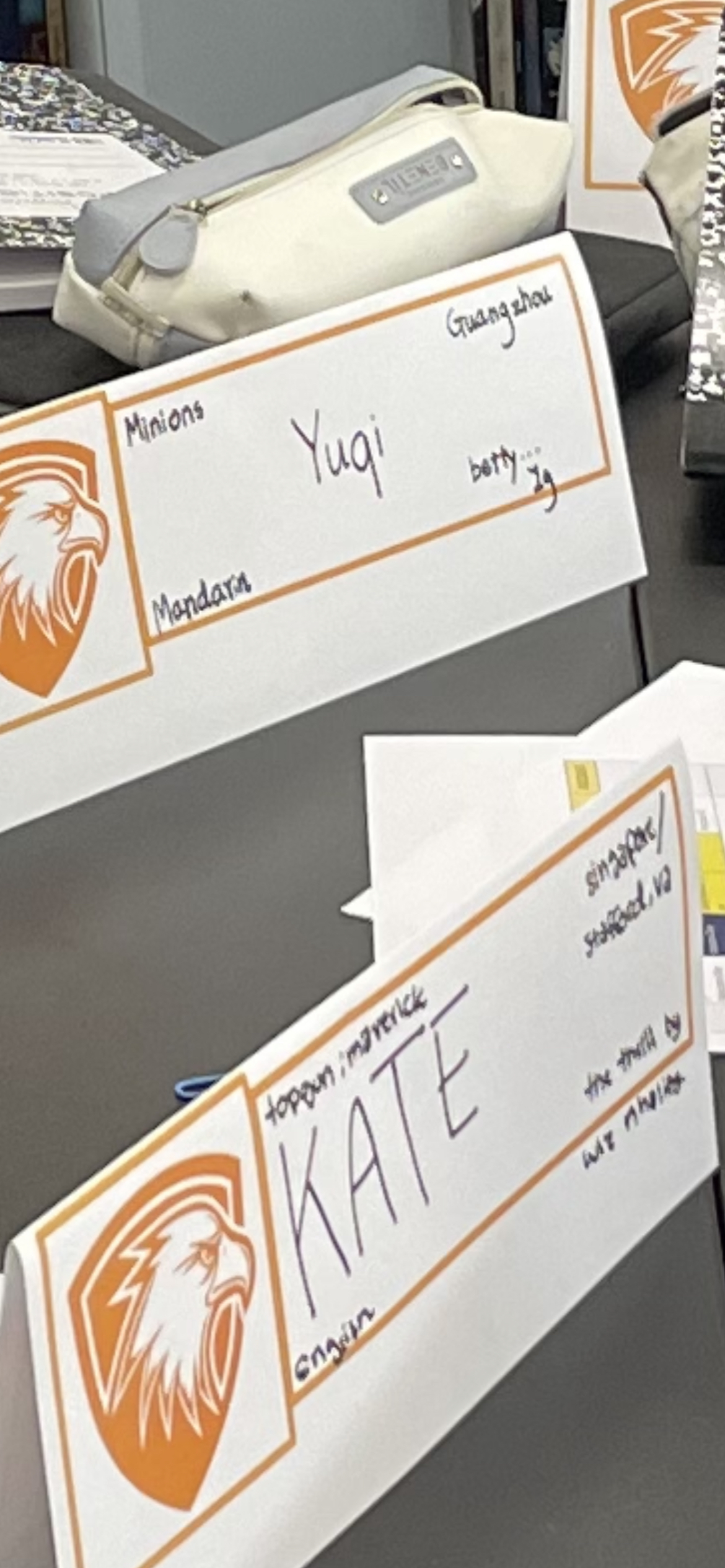
I begin the work of listening and learning learners' names with name tents at each color themed table. I organize students into color groups (red, orange, yellow etc.) and then eventually into larger "rainbow" groups. This routine begins with name tents and "shape your thinking" signs for the classroom.


The shape signs hang over each table group. They become a routine we can use to respond to different media or ideas throughout the year. The name tents are a visual reminder for everyone in the room:  students, teachers, substitutes, visitors. We make a habit of keeping them all year and using them when needed. You can see in these two from last year's initial "orange" table that students also wrote quick interests in the four corners: 

  • a favorite movie
  • a favorite song
  • their mother tongue
  • where they've lived
The name tents serve as quick, visible reminders I can listen to, learn from and and respond to. To extend them, have parents jot a note of encouragement on the inside if they come for back to school night.

I also listen by reading what students write on surveys or sentence completions. Several posts from the past show iterations of sentence completions I've used with high schoolers:

Building Community August 2022

Unsettled Meet Grace August 2017

Spot On 2015

I put sentence completions on desks for learners to see as they come in. Learners can start right when they arrive or wait until the session begins. It gives them something to do and many high school students have said it helps take away a bit of the awkward some of them feel coming into a new space with new people. 

As a teacher, I  learn about students and I can begin to assess what they know about sentence structures, books, writing and school. I collect the writing that first day after and that first afternoon/evening I respond to them by the next class. 

How can you turn class sets around so quickly?

  • read the responses quickly
  • aim for 2-3 minutes response writing (set a timer if you need one)
  • respond with quick agreements and praise
  • ask a question
  • offer a study suggestion or book recommendation


Could we do them digitally? Yes, and yet there is something fantastic about staying away from screens in our first few days together. Responding does take time. That time varies depending on my focus and, of course, how many students I have. After I respond, I scan the sets before I return them and I keep them in a class "notebook" in my GoodNotes5. That way I can revisit what students said and reconnect to their initial interests if I notice they need that. Sometimes on a progress tracker Google sheet or in my teaching journal I note students initial strengths and possible needs. I ask myself:

  • Who spontaneously uses capitalization and end punctuation?
  • Which students were able to navigate using the appositive phrase? 
  • Which love reading? Which students hate it? What topics are they interested in? 
  • What do they do after school?

I love learning about and connecting with a new group of leaners. Wishing all of my educator friends a wonderful first week of school!


Quick links to additional activities: 

Photo Slides and Story Sharing

Would You Rather Questions: Sit or Stand

Warm Welcome Questions  

Would You Rather 2: Pear Deck

Human Boggle  

Record Sixty Second Selfies (see Singapore American School's series for question ideas)

Use Action for Happiness' Monthly Calendar as conversation starters or inclusion activities

Check out Playworks or Playmeo for fantastic group games 


Coming soon, how do you use what you learn about  learners? 


Wednesday, March 29, 2023

Past and Future Tools: From Word Processors to AI

In my teaching and learning life, I have seen some change. I've seen teachers go from purple-inked ditto masters to overhead projectors. I've played in the WYSIWYG pool of web content creation and thrilled at the dial-up static in an early computer lab. I saw the birth of Smart Boards and the explosion of collaboration made possible by shareable spaces and documents. I've toured and lived in G-suites and classrooms Canvas-ed in content. As with many of us educators, my excitement led me to learning more, and doing more, from EdCamps and NCTE's Tech-to-Go Kiosks to writing for Stenhouse, Janet Allen and myself. 

Innovations in technology ignite my curiosity, and right now, like many of us, my wondering fires up over AI  tools such as ChatGPT and DALL·E 2.  For me as an educator, the question has not been should we allow students to use these tools though. I wonder instead about the why, and the how and the when.  

  • How might we use these tools in schools? 
  • Why might it be important for students to learn how to leverage these tools? 
  • When or for what would using these tools amplify what learners know and are able to do? 
  • How might these tools create alternatives for learning, news ways of thinking, new ways to collaborate or create?
  • How do we maintain academic integrity while also exploring new technologies? How do we teach such values to students? 

In the late 1990s when I was a beginning teacher I remember when we began having students use word processing programs to write. We used Claris Works in the first school where I taught. After an observation, a school leader asked me how a computer was better than using pen and paper? That question led me to critically reflect on my practice. 

My reflections led me to models of tech integration such as the SAMR model and  ISTE's standards, and later,  the Technology Integration Matrix (TIM), from the Florida Center of Information Technology. 


SAMR illustration by Lefflerd at Wikimedia Commons used under Creative Commons Attribution-Share Alike 4.0 International license.

Then, word processing programs augmented, to use language from the SAMR, our writing practice in the classroom. Now, writing collaboratively in goal-oriented ways in shared spaces has redefined and transformed what writers in schools are able to do. 

When I think about AI tools such ChatGPT and others I'm exploring, I can't help but marvel how these will fundamentally change productivity. This shift, may indeed redefine, as the SAMR model notes, or transform, to use TIM language, how we teach and learn.


As faculty discuss and sometimes deplore how students are using these tools, I'm thinking about teaching and learning scenarios like the ones below.  I'm wondering how we might collect and discuss them? I'm wondering how scenarios like these  might live on the Technology Integration Matrix and what sorts of shifts we'll see?  

Scenarios

Scenario 1: Students engage in paired or small group discussion to process text/information; after discussing they then prompt ChatGPT to discuss the content or answer lingering questions, then synthesize the ideas in another round of discussion. 

Scenario 2: A student is asked to write to analyze how theme is developed in a poem. They want to see different ways to organize such an essay, and ask ChatGPT to write an analysis essay about a different poem that is organized chronologically and then a second time, organized by devices used by the poet.

Scenario 3: A student asks an AI to explain a concept and then compares the response to their own notes and understandings of the concept, adding to or revising their own understandings.

Scenario 4: A PLC team uses ChatGPT to unpack a standard in order to develop learning targets and then create success criteria or rubrics. The team goes an additional step and generates sample responses to use with students to evaluate the writing.

Scenario 5: An instructional coach works with a teacher using ChatGPT to create differentiated learning activities to support students learning.


Additional Reads

Baguley, Richard. (20 March 2023). "21 Tools for Content, Image, Sound and Video Creation,"   

Ferlazzo, Larry.  (18 Jan 2023). "19 Ways to Use ChatGPT in Your Classroom." EdWeek

Taylor, Stephen. (Dec 2022). "(If you) USEME-AI."

Sunday, March 19, 2023

Sunday Slice


Words ran from me this week. Hard news from an old friend chased words around the house and out the door. Still, flowers bloom, friends connect, the sun rises, spring break arrives.

Thankful.


Hand painted stainlessd tumblers from Boutiques, a gifty market fair in Singapore.


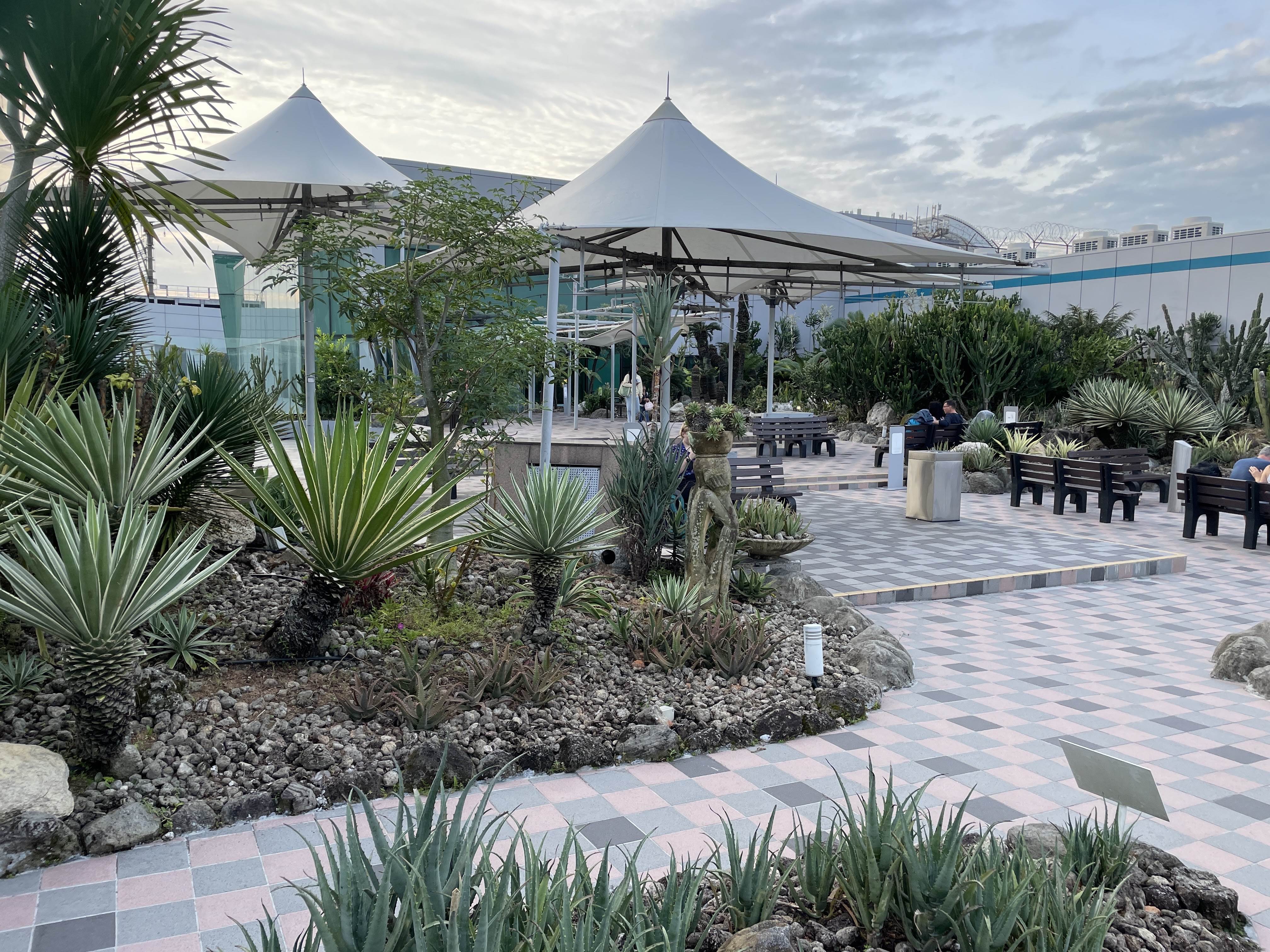
The rooftop cactus garden at Singapore’s Changi airport. 


Shophouse near Jalen Sultan, Kuala Lumpur


Chestnuts roasting at the


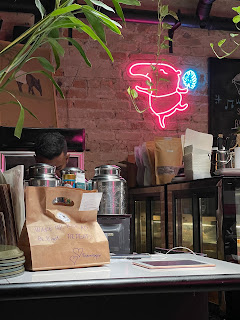
Inspiration at the Hungry Tapir. 


Friday, March 17, 2023

Tech Trouble: Slice of Life Day 17 of 31

 I walked to the bus stop this morning. The air is still and heavy with humidity today. Grey skies bode rain soon. I found myself wishing for last week's windy weather. The 912B pulled up just after I got to the stop. 

Yes! No waiting this morning. Air conditioning cooled me as I stood the few short blocks to school. I pulled last night's blog up on my phone.

Wait? Where is it? 

I see the title, Stories Simmering. I see a blank white post beneath! What happened? Where's the slice I wrote?! 

Where's the photo from parent conferences? Where's my reflection about the stories I'd been thinking about all day? Where's the bird's nest fern? the trumpet flowers and the Ixora, the blossoms that mark and cheer me on my walk home? Nooooooooooo. Bummer. Oh well, tech trouble happens.

Still, as my students would say, I broke my streak!  I don't know what happened yet. The fixer in me  wants to figure it out now. It'll have to wait.

I wrote the post after school yesterday on my laptop at home. I'm on my school laptop now, and while the platform should sync and show me same same, I'm not so sure it is. 

In ten years, I've not had encountered this particular snafu. Perhaps the wifi at home dropped the post while I publishing? Perhaps I'd selected all and hit a key deleting as I posted? Perhaps I closed the laptop too soon? Perhaps, perhaps, perhaps... definitely fixable. Definitely low impact and import. 

I'll investigate when I get home today after parent conferences.  We'll see if I can solve the mystery.

Many thanks to the team at Two Writing Teachers who host the Slice of Life Story
Challenge every day in March and on Tuesdays through the year. 

PS: Happy St. Patrick's Day! 

Wednesday, March 15, 2023

Classroom Climate

One day, I will keep a daily journal of the climate of the classroom.

When during the year are we flushed with enthusiasm for learning?
When do kids come into class wanting to tell me everything that is happening?
When do they fall silent?
When are we mired in minutia?
When are kids so engaged they lose track of time? 
When does it seem like the very air is electric with curiosity and engagement?
When do routines lose their shine?
When do kids want to talk all the way out the door about what we were just doing?
When do they lean on one another and help one another?

During the beginning of this year, I told myself I was going to remember the thrill of the first month of school. And I do remember those feelings, that excitement. Putting name tents on tables, responding to interest inventories and building communities with games and stories. 

Beginnings are joyous: getting to know students, writing together, introducing students to books.  Beginnings shine, so full of light. 

The final days before spring break, not so shiny.  Some moments as we wrap up quarter three, loom more dark cloud than blue sky. 

Tis the school season, I tell myself and this too shall pass. One moment in the feels and rhythms of a school year. 


Tuesday, March 14, 2023

Assessing and Re-Assessing

 "If we didn't use evidence from the unit in our essay does that count against us?" a student asked this afternoon as they were reviewing recent on-demand, argument essays.

"Yes, the prompt asks that you use evidence from the readings in this unit, so if you did not address that part, then it will count against you," I answer.

"Could we have mentioned one title and author--is that enough?" the student probed.

"We, the teachers in the AP Language PLC, didn't put a quantity or a number on how many pieces of evidence from our six week unit would "count" per se, so I can't answer that without reading through your argument--- does that make sense?" 

In my mind, I'm scrolling through all of the reading we did together and then all the articles  students could choose to read independently during the unit. Together we read Ta-Nehisi Coates' Between the World and Me, excerpts from Iojema Oluo's So You Want to Talk about Race, and  Nguyen's "Asian Americans are Still Caught in the Trap of the Model Minory Stereotype." Students also had weekly choices to read which included: 

The student nods affirmatively. Then asks, "we will we have a chance to re-assess this timed writing?"

I knew the question would come and I did not want to say no. At the same time, if you are taking a position on an argument prompt about protests and oppression and you do not reference any of these readings...  what could that tell me as a teacher?

"We will continue to practice and improve our skills when it comes to writing argument on demand. And no, because you wrote two pieces and then reflected and chose which to have scored, reassessment will not be offered on this particular assessment." 

Later, I spoke with the student about connecting with me for more coaching over practice they could write in their journal. I know the student will take me up on it. They are keen to improve and they have their eyes on the horizon that is the AP Language exam in May.

How do you handle reassessment in your PLC or department? 

Many thanks to the team at Two Writing Teachers who host the Slice of Life Story
Challenge every day in March and on Tuesdays through the year. 


Monday, March 13, 2023

Flexible Learning Spaces

Think for a minute about the tools you used at the start of your career in education. Perhaps you began before email and cell phones. Perhaps you were there for the World Wide Web's debut. Maybe you've always been able to read, write and collaborate in digital spaces.  Perhaps you began with Microsoft's suite of tools and copy machines that served as hub-printers scanners and copiers. Maybe you used an overhead project or document camera or a Promethean board! 

As a digital pioneer and long-time educator, I've enjoyed learning through every change. What hasn't changed much, however, are classrooms or learning spaces. Sure, I remember Debbie Dillar's Spaces & Places, and thinking about doing away with a teachers' desk in  my earlier classrooms.  I remember one year running a donor's choose campaign so that I could buy a variety furniture to use flexibly and then allowing students to choose where and how to work in our room. Flexible learning environments go far beyond that. 

Singapore American School embarked on a reimagining process several years ago. They are designing flexible learning environments for the next century hoping to shift from: 

  • isolated to teamed 
  • teacher-directed to student-directed 
  • isolated content to integrated content
  • classroom-based to community-connected and collaborative
These shifts and more are illustrated below. As you can imagine, much like the learners we serve, we educators are all in different places on this continuum. 


Though we're in different places, we are all learning. And that, if sometimes frustrating, excites too. To get in on the excitement, check out this animation of what the campus may eventually become: 


Incredible, isn't it?! Architecture, our architects, Fielding International, and the spaces our students and faculty are talking about and shaping are inspirational and aspirational.   We're exploring and learning alongside one another in the high school.  It's daunting and thrilling work. I'll share a few of those daunting and thrilling stories from my own practice in the coming weeks. 

PS: Want to see more cool designs? Check out Designing for a Better School by Roan Bosch, whose work includes the Western Academy of Beijing.


Sunday, March 12, 2023

Sunday Snaps

Grateful for simple pleasures and good company, continuing snap appreciations as my Slice of Life this Sunday.


Cozied up with a good book and thunderstorm this week. Clean, crisp
sentences, stark truths. 


Rooftop views with friends at week's end.

Logos &  line art

Lobby line art from Andaz, Singapore. 


Basilico's cheese room and weekend brunch with a friend.

FaceTime sharing:  stories, screens, and photos from my
 brother's visit to Mom's; matching shirts as memory & story prompts, love it.


Saturday, March 11, 2023

Alignment to Experiences: List Slice

No story, per se, yet today. Perhaps I was too taken with the cheese room at Basilico. Can you believe that selection? 

I

Aside from the amazing brunch options, I'm thinking about: 

  • alignment
  • assessment
  • back to basics: that whole movement in the early 2000s and how it relates to our post-Covid experiences in school
  • curriculum
  • data
  • experiences and engagement

Just a few school thoughts on this fine Saturday afternoon. Perhaps I'll tell stories about these (or the cheese) in days to come. 


Friday, March 10, 2023

Generate Curiosity in Nature

Part of blogging, for me, is meeting new-to-me bloggers through their daily slice of life posts. Mornings with coffee in hand, I spend some time getting inspired by the posts from the night before. 
This morning found me reading Dr. Kim Haynes Johnson post about Ecotherapy on her Common Threads blog. Kim's been inviting others into her blogging experiences, so this morning's post was actually written by her sister-in-law, Dr. Bethany Johnson. In addition to defining "ecotherapy ...as the practice of therapy that focuses on being outdoors and in nature," Bethany also noted its benefits on several body systems.

Her writing brought forest bathing, mindfulness and writing with students outdoors to mind. 
It's been years since I sent students out onto campus to sit, observe, sketch and write. 

Singapore's Covid 19 protocols prevented that in the past three years. Prevention measures required groups of varying sizes  during that time. While students could be outside in a small groups of five, like our elementary school students who wore colored wrist bands for group identification and sat in hoola-hoop groups of five to talk to one another and "play" in small, socially-distanced pods. The measures in place prevented intermingling and required us to know who was where when so that contact tracing was possible should the virus spread at school. Singapore just discontinued mandatory mask wearing on public transportation, the last of the mandated Covid 19 prevention measures to be lifted. 

Perhaps we'll do a walk about campus soon. We've got a vlog project coming up and the environment is one topic students may want to explore. Perhaps getting outside on campus to take a few photos and write in our journals will spark some creative thinking. Ah, we could even do a short mindfulness meditation first to relax and center ourselves. I'm liking this sequence. Perhaps it could be something like this: 
  • Organize supplies: journals, pens, colored pencils, etc. 
  • Explain the activity & check for understanding
  • Model wondering with photos from recent walks
  • Walk to the eco-garden or the rain forest area behind middle school
  • Find a spot and get comfortable
  • Headspace mindfulness practice 
  • Listen, observe, record, write and sketch
  • Return to classroom
  • Review observations
  • Share
  • Connect to current project: generate questions to explore further
I'm liking the sound of this plan! Perfect as we head into the final days before parent teacher conferences and spring break. Definite connections to our upcoming inquiry! 

Here a few photos from recent walks on campus and in the neighborhood that sparked my own wonderings. 


How do bats compare to other mosquito (or pest)  prevention methods impact on the environment? 

Plants, such as the fruits of the Cannonball tree have medicinal properties, how are plants, even the foods we eat, medicine? 

I could wonder away about these images. Nature, just as Dr. Johnson and others have said, has transformative powers to take us away from ourselves and into other worlds. 

Many thanks to the team at Two Writing Teachers for hosting
the Slice of Life Story Challenge each March!


Thursday, March 9, 2023

Eagles are Everywhere

We have all sorts of sayings at school. From "the eagle way" which defines how we apply our core values of compassion, fairness, honesty, respect, and responsibility to situations in and out of school to "once an eagle always an eagle," these mantras build school culture and keep us connected. 

This slice is about eagle spotting.

Such connection surfaced today when I met with David, an advisor from The Investment Center. I'd booked an appointment to review the investment plan I've been contributing to while working here and to learn what I need to do as I prepare to move back to the United States. Though David and I have met yearly for several years, I didn't know much about his family. 

Turns out we both are parents of recent graduates. His daughter graduated in 2022 and my son in 2019. We both are parents of single children and while we are living in Singapore our children are in going to college in the United States. Both of kids are studying engineering. When David said that his daughter is a student in Seattle, I shared that my son  lived in Seattle for an internship this fall and that he's returning in May.

We grinned. 

David wondered, "would your son would be willing to talk with my daughter about engineering? She's looking to find her focus: mechanical, electrical, civil...."

"Sure! I bet he would. Let me give you my contact and his name. I'll reach out to Collin and ask.

Before midnight Eastern Standard Time, and lunch here in Singapore, we'd contacted our own kids and they'd gotten each other's info. How cool is that? 

Eagles are everywhere.

Special thanks to the team at Two Writing Teachers for
making space and building community with us writers.


Wednesday, March 8, 2023

Overheard in the Hall: Gatsby Talk


"I feel bad for Tom though," one boy said.

"What?!" a girl in the group replied.

"Well, he's lost both of his women..."

"You can't side with the white-supremacist, ..."

"Well, I feel for him. Daisy cheated on him and ..."

"TOM CHEATED ON HER!"

"Well, yeah, but... then his other woman is killed...and Daisy..."

"Bro, seriously? What?! No... "


What does this exchange tell you about learners' beliefs? 

Students in tenth grade English might read The Great Gatsby as a core text during an analysis unit. There are benefits and barriers to teaching whole-class novels and before coming to Singapore American School, I'd moved away from the practice and focused more on teaching skills and standards with short texts, reserving long texts or novels for independent reading or book clubs. The practice here was different, so at first, I conformed. 

Then,  in my second year of teaching English 10 here, and after reading Disrupt Texts piece on teaching Gatsby, I shifted.  I went from teaching Gatsby to the whole-class to offering it as one of many book club choices. That change required PLC conversations as well as support from the department in purchasing titles.  I'm glad I had the opportunity to both talk through the what, the why and the how as well as to make the change in my own classsroom. 

Book club choices for 3 of 5 units in sophomore English.

I teach a few of those tenth graders this year in my AP Language class; they still talk about the books they chose during those units.  

Though we've just finished a unit on race in AP Lang (now not possible to teach such a unit in my home state of Florida, but that's another story).  We read Ta-Nehisi Coates' Between the World and Me, excerpts from Oluo's So You Want to Talk about Race, and  Nguyen's article discussion of the Asian model minority stereotype and many other choice articles from The New York Times, The Washington Post, The Straits Time, The China Morning Post, The Economist and more. During our discussions and conversations in class, nobody brought up Gatsby and his dream. 

Surprising? Maybe. Maybe not. 

Students need support in order to transfer and connect knowledge be that knowledge skill or content. In order to connect concepts from last year's work, I likely need to plan for that more intentionally. Now that I'm reflecting on it, I wish I had pulled a few dream passages from that set of novels as well as a dream passage from Coates or a promise passage from Oluo--that would have been a good Socratic practice there, zooming in on specifics. Always, I could do something a bit differently. Next time, I tell myself.


Many thanks to the team at Two Writing Teachers (TWT) who hosts Slice of Life Story Challenge
every day in March.
Swing by TWT to serve yourself up another slice or  write your own, link up and join us!


Tuesday, March 7, 2023

FaceTime Slice


Visiting Collin in Seattle, December 2023

My son is a senior in college and we FaceTime at least once a week. We schedule our chats, so that we can have a regular time to connect--this quarter we're on my Tuesday mornings, his Monday evenings. Typically I get to school a bit early, settle into a cozy spot and give him a ring. 

This morning we talked about his classes and about spring break. He's heading to New York with friends to spend time in the city. 


"Where are ya'll staying again?" I asked him.

"A Marriott--Times Square--I think. .."

"Wow. I wonder if that's the same Marriott we stayed in when NCTE was in New York?"

"I don't know."

"Yeah, you were young, six, seven?"

"Why didn't you all do AirBnB?" I asked thinking about the fabulous place we stayed the summer he was ten.

"I booked Marriott with points. All my points from the internship stay paid for half of the week for the rooms."

"Wow." 

Collin interned during the fall semester. His housing--a Marriott Suites-- was covered by the company, so he went Titanium or Platinum or Diamond on points pretty quickly. 

"That's great. Tell me again what you all planning?"

"Well, we're getting there Sunday and we'll check into the hotel and maybe walk around Chinatown that day. Then a show on Tuesday and.."

"You know I'm happy to fund another show ... since you're going to be there and..."

"I really want to pay for things myself this trip--it's the first time I've been able to do that and..."

"I get it!" I quickly respond. I couldn't tell I was proud of him in that moment, my eyes were tearing up and I knew my voice would break or be all trembly.  If I'm being honest, I'm a little sad too. I miss him.

I shift. Stay focused on the good. More is yet to come for us. I remind myself to keep it light. 

"Ya'll could also land day-of discount tickets since you're there and may have time."

"Yeah, we thought about that."

"What about The Strand? Are you going?"

"OH! THE STRAND... I forgot about that book store. I am adding that to the list right now."

"And you, maybe you create re-create this picture if you're going to the museum anyway--the Ancient Playground is, like, right next door..." grinning I text him a link to the photos we took when we last visited New York City together. 

"Oh, that can definitely happen," he says. 

On the swing at the Ancient playground, 10 years-old
and on FaceTime with Mom, 21 years-old 

And so it went. We talked. We laughed. 

Love that boy

Well, man now I suppose I should say.

Today is day 7 of 31 of the Slice of the annual Life Story Challenge 
hosted by the terrific team at Two Writing Teachers.